Pavers planning guide
Is My Paver Base Deep Enough?
Use this quick depth checklist before estimating gravel, bedding sand, compaction overage, and total paver project materials.
Quick answer
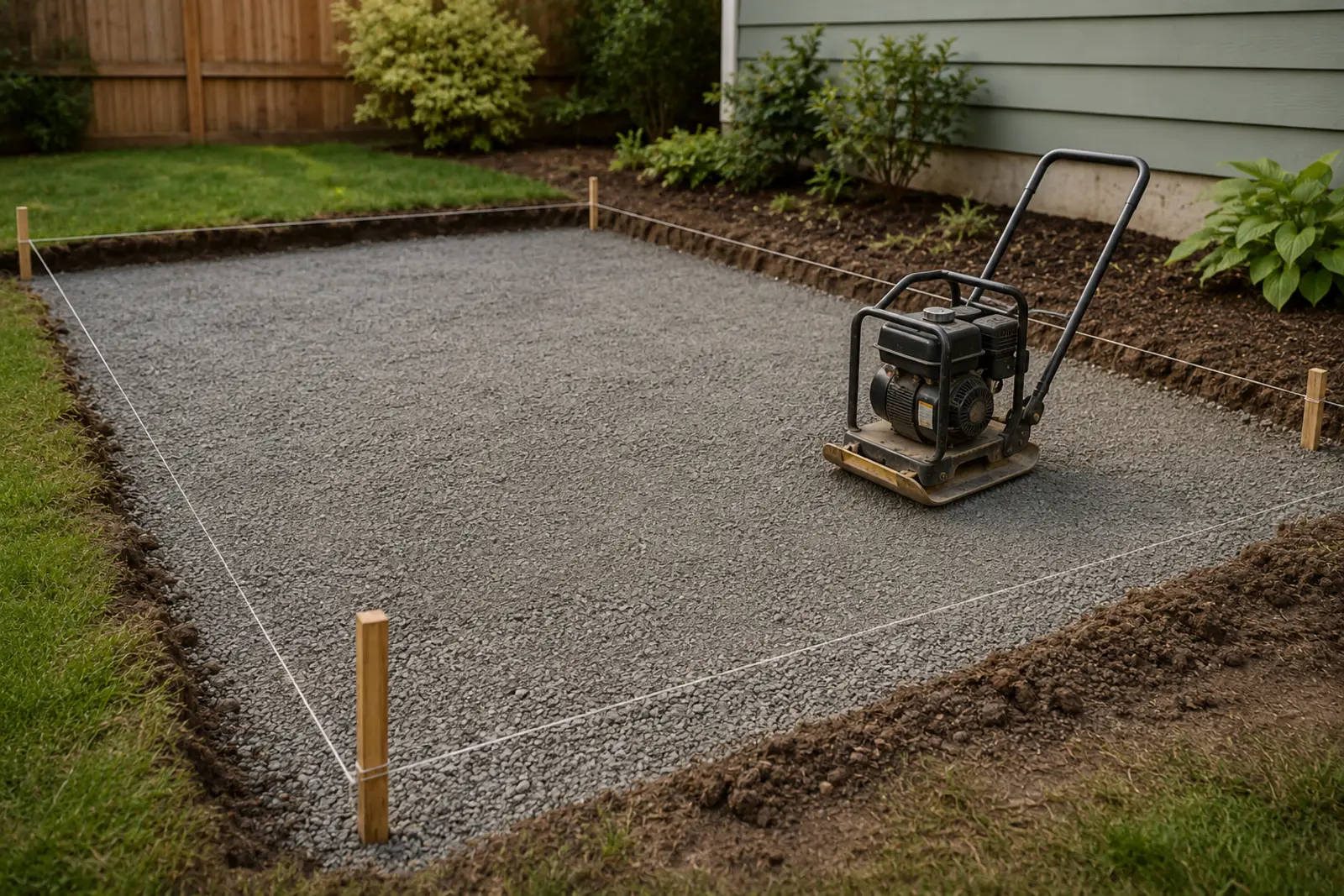
Many pedestrian paver patios start around 4 to 6 inches of compacted gravel base plus about 1 inch of bedding sand. Walkways may use less, driveways usually need more, and soft soil, poor drainage, freeze-thaw movement, or vehicle traffic can change the plan.
Base depth is the first decision to check when a paver patio, walkway, or driveway estimate does not feel right. A base that is too shallow can save material on paper but may leave too little compacted gravel to support the surface, shed water, or handle edge movement.
The numbers below are general planning estimates, not local construction rules. Soil conditions, drainage, freeze-thaw conditions, paver thickness, edge restraints, traffic loads, and manufacturer instructions can all change the final base design. Use the checklist to decide what to estimate next, then confirm the final build-up with product instructions and qualified local guidance when the project is structural or safety-sensitive.
Typical paver base depth by project type
Recommended planning depths for paver base
Use these as starting points for quantity planning. A deeper base can quickly increase gravel tons and bag count.
| Project type | Typical gravel depth | Sand bedding depth | Notes |
|---|---|---|---|
| Patio | 4 in to 6 in | 1 in | Often planned for foot traffic and outdoor furniture; poor drainage may require more base. |
| Walkway | 3 in to 5 in | 1 in | Depth depends on soil firmness, drainage, and whether the path will carry carts or equipment. |
| Driveway | 6 in to 10 in or more | 1 in | Vehicle traffic usually needs a more robust base. Confirm local and product requirements before building. |
| Small garden path | 2 in to 4 in | 1 in or less | Light-use paths may use less gravel, but soft soil and edge movement can still cause settling. |
These depths are general planning estimates. They are not building-code guidance, engineering design, or manufacturer installation instructions.
Base depth decision checklist
Use this checklist before choosing one depth for the whole project.
| Question | If yes | Planning next step |
|---|---|---|
| Is the surface for a patio or foot-traffic walkway? | A 3 in to 6 in gravel range is often used for early planning. | Pick a starting depth, then estimate gravel and bedding sand separately. |
| Will vehicles, heavy equipment, or a driveway use the surface? | A deeper and more robust base is usually needed. | Do not use a patio depth as the final design. Confirm requirements before ordering material. |
| Is the soil soft, disturbed, clay-heavy, or poorly draining? | A shallow base may settle or hold water. | Plan for drainage and compaction checks before reducing gravel depth. |
| Does the project need to slope away from the house? | Depth and excavation need to leave room for the planned drop. | Check the slope guide before finalizing excavation depth. |
| Are existing pavers sinking or rocking? | The issue may be depth, compaction, water, edge restraint, or bedding sand. | Use a symptom checklist before buying more joint sand or extra pavers. |
A checklist does not replace local installation requirements. It helps you decide which material assumptions to verify before calculating.
Base gravel and bedding sand are separate layers
Estimate the compacted gravel base and bedding sand separately. Gravel usually provides the structural base layer, while bedding sand helps set and level the pavers. Do not combine the depths unless your product instructions explicitly describe a different system.
Example: 10 ft x 12 ft patio with 4 in gravel and 1 in sand
Inputs
- Area: 120 sq ft
- Gravel depth: 4 in
- Sand bedding depth: 1 in
- Overage: 10%
Estimated result
Base gravel is about 40.00 cu ft before overage and 44.00 cu ft with 10% overage. Bedding sand is about 10.00 cu ft before overage and 11.00 cu ft with overage.
The calculation multiplies area by depth converted to feet. Four inches is 0.333 ft, and one inch is 0.083 ft.
Example: 3 ft x 30 ft walkway with 3 in gravel and 1 in sand
Inputs
- Area: 90 sq ft
- Gravel depth: 3 in
- Sand bedding depth: 1 in
- Overage: 10%
Estimated result
Base gravel is about 22.50 cu ft before overage and 24.75 cu ft with 10% overage. Bedding sand is about 7.50 cu ft before overage and 8.25 cu ft with overage.
A walkway has less area than the patio example, but depth still matters. Increasing gravel depth from 3 in to 4 in would add 7.5 cu ft before overage.
How compaction and waste affect the estimate
Base gravel is usually compacted in layers, and compaction can reduce the loose volume after placement. Edges, uneven excavation, material left in bags, and small layout changes can also increase the amount you need. A 5% to 10% overage is a common planning range for simple projects, while irregular edges, poor soil, or driveway work may need more conservative planning.
Plan the full paver material list
Plan gravel base, bedding sand, paver count, edge restraint, joint sand, and bag versus bulk material options.
Related resource free Paver Patio Planning PackTurn this checklist into a printable material plan with the free Paver Patio Planning Pack.
Related resource paver base gravel and sand calculatorEstimate gravel base, bedding sand, cubic yards, tons, bags, overage, and optional user-entered material cost.
Related resource sand-only paver base decision guideDecide when sand alone is too weak and why bedding sand is not the structural base layer for most paver projects.
Related resource paver patio material checklistTurn dimensions, base depth, slope, pavers, edge restraint, joint sand, and overage into a practical material list.
Related resource paver slope and string-line plannerBuild grade-stake readings and check patio drop, drainage direction, and finished elevations.
Related resource sinking paver symptom checklistMatch sinking, rocking, low edges, washout, and joint gaps to likely base, drainage, or restraint problems.
Related resource paver surface quantity calculatorEstimate the number of pavers for the finished surface before planning the base layers.
Related resource general gravel cubic yard and tons calculatorEstimate gravel volume and approximate tons for paths, beds, and other non-paver base projects.
FAQ
How deep should paver base be?
Many patios start around 4 to 6 inches of compacted gravel base plus about 1 inch of bedding sand. Walkways may use less, while driveways commonly need more. Always check soil, drainage, product instructions, and local requirements.
How do I know if my paver base is not deep enough?
Warning signs can include sinking areas, rocking pavers, low edges, washed-out joints, or water collecting near the surface. Depth is only one possible cause, so also check compaction, drainage, edge restraint, and bedding sand.
How much sand goes under pavers?
A common planning assumption is about 1 inch of bedding sand under the pavers. More sand is not usually a substitute for a properly compacted gravel base.
Should I add extra material for compaction?
Yes, it is often practical to include an overage or compaction factor. Simple projects may start around 5% to 10%, but the right amount depends on soil, excavation accuracy, and layout complexity.
Can I use this guide for driveway pavers?
Use it only for early quantity planning. Driveways carry heavier loads and may require deeper base layers, better drainage, and local requirements that this guide cannot verify.
Sources and review notes
Reviewed . These references support the unit conversions and planning assumptions on this page. Confirm the exact product label and local project requirements before buying material.
- How the calculations work HomeMaterialCalc. How HomeMaterialCalc handles formulas, rounding, browser-based calculations, and prices you enter.
- NIST Guide to the SI, Appendix B: Conversion Factors National Institute of Standards and Technology. Length, area, and volume unit conversions used in calculator formulas.
- Construction of Interlocking Concrete Pavements Concrete Masonry & Hardscapes Association. Grade stakes, string-line layout, slope, aggregate base, bedding sand, paver, and compaction planning.